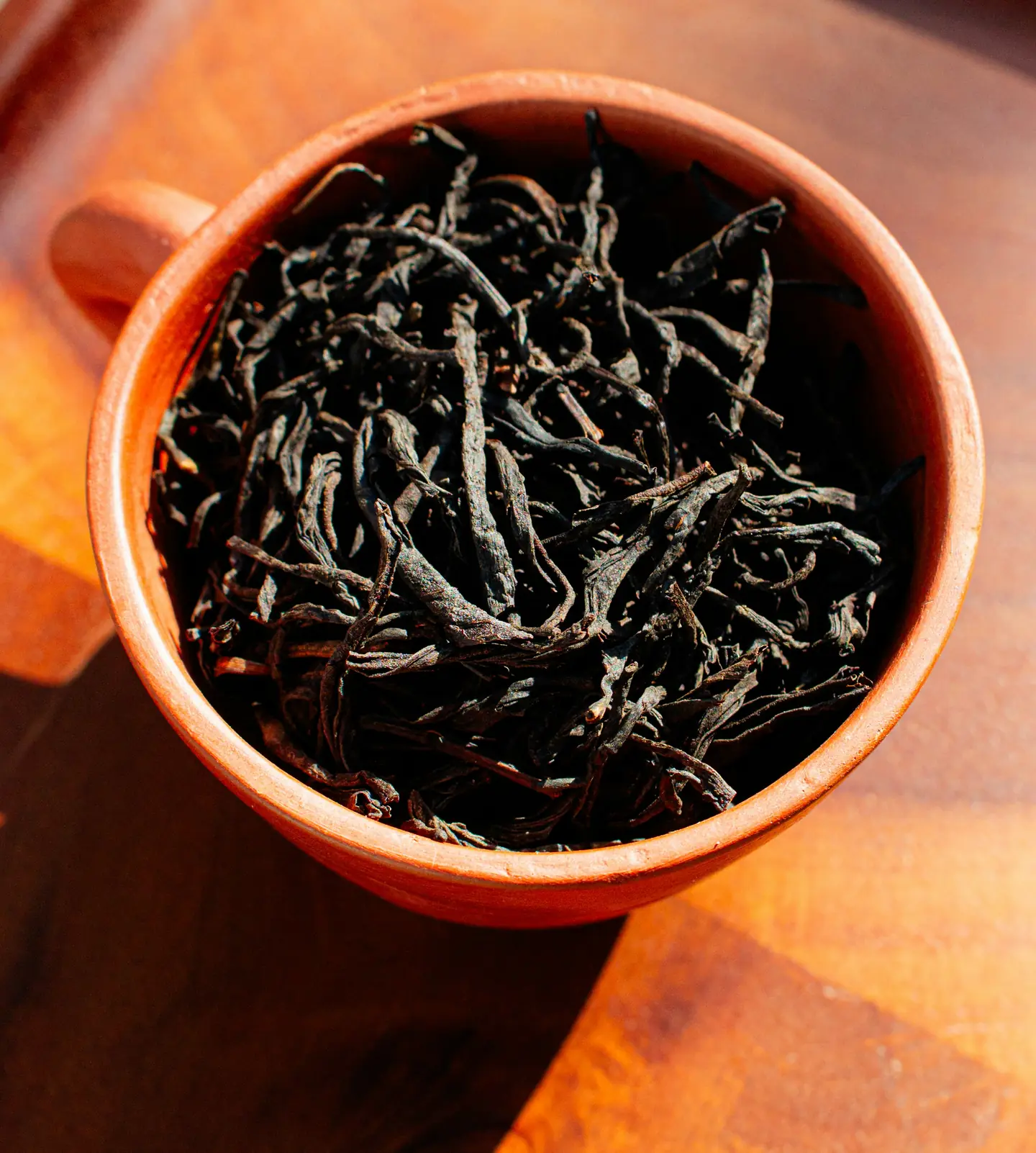
Sometimes we smell the tea before we taste it. Open a tin of dry leaves and there is one impression; bring a freshly brewed cup toward your face and another appears. Let the cup cool and the aroma may seem to shift again. So when a perfume promises a “black tea” note, perhaps the first question should not be how much tea went into the bottle. It should be: which moment of tea is the perfumer trying to remember?
Black tea is not one fixed smell. Researchers have documented black teas with floral, fruity and honey-like impressions, alongside malty, green or roasted facets in different samples and processing conditions [1][2]. A simple-looking cup contains an extraordinarily varied cast of volatile molecules. In perfume, meanwhile, “tea” may be a carefully composed impression, rather than evidence that tea extract is present at all.
A tea leaf has a life before the kettle
Tea varieties can feel so different that it is easy to imagine they come from entirely unrelated plants. Yet black, green and oolong teas commonly begin with Camellia sinensis. Much of what distinguishes the finished beverage is what happens after the leaves are picked: how they are handled, oxidised, heated and dried [3]. Those choices change more than the colour in the cup. They help shape the aroma that reaches us.
For a typical black tea, the fresh leaves are first withered. They then go through rolling or another process that disrupts the leaf tissue, bringing naturally occurring enzymes and substances into contact with oxygen. Oxidation follows; heat and drying eventually bring the process to an end [3][4]. Tea-industry descriptions sometimes call the oxidation stage “fermentation”. That historical term can be misleading: ordinary black tea production is principally enzyme-mediated oxidation, not the microbial fermentation we might associate with beer or yogurt [4].
There is no simple rule that every stage makes a tea universally “more aromatic”. Some volatile compounds increase, others diminish. The drying method can shift the final profile, too. A 2024 meta-analysis brought together observations of key aroma compounds across black-tea processing and illustrates why the journey of the leaf matters to the eventual scent [1].
Why some black teas seem to smell of flowers
Imagine lifting a cup and noticing something softly floral, even though no petals were added. To investigate such impressions, researchers combine chemical analysis with sensory methods. Identifying a molecule in a sample is not the same as showing that it is a major contributor to what people smell. Scientists therefore use approaches designed to connect detected compounds with odour activity [2].
A 2024 analysis of Keemun black tea identified geraniol, β-ionone and linalool among contributors to its floral character. The study also described odour-active materials associated with a malty impression and found differences between tea grades [2]. Another study of sweet-and-floral black tea followed volatile components through manufacturing and reported aroma-active compounds including linalool and β-ionone [5].
Nothing about this implies that rose or jasmine flowers have secretly been added. Words such as “floral” are descriptions of a perceived quality, not a botanical ingredient list. Chemical names do not diminish the poetry of the experience; they help us understand why the ordinary language of smell can feel so vivid.
Nor should a finding from Keemun be turned into a universal statement about every black tea. Leaf variety, growing environment, quality and processing can all matter. One study gives us a closer look at a particular example—not a single formula for tea as a whole [1][2][3].
Dry leaves, hot liquid, a cooling cup
There is a reason smelling leaves straight from the packet feels unlike smelling a brewed cup. Adding water and heat changes the conditions in which aroma compounds move into the air above the tea. We encounter a different physical situation and, sometimes, a different balance of impressions. [7]
It is tempting to turn that into a rigid story: dry tea smells one way, hot tea another, and cold tea must always end on a third note. Real life is less orderly. Brewing method, tea type, temperature and individual perception complicate the picture. What matters here is the simpler observation that “the smell of tea” can point to several distinct experiences.
For a perfumer, those experiences suggest different creative directions. A dry-leaf impression need not smell like the steam rising from a cup. An airy suggestion of tea might feel quite unlike a deeper, darker interpretation inspired by the residue of the drink. We use the same word, but we may be remembering different moments.
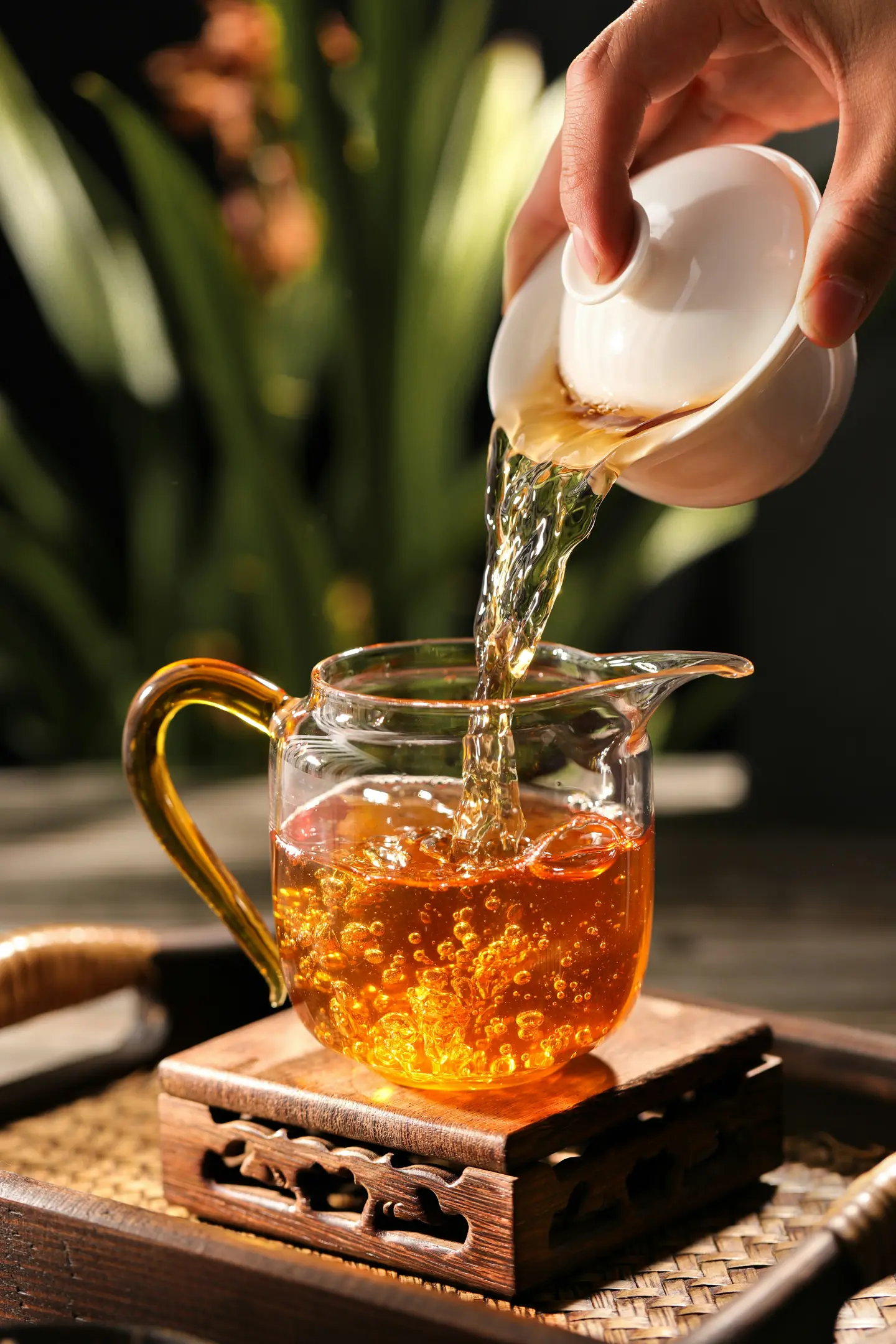
Tea enters the perfumer's vocabulary
Perfumery has a language of its own. A note is a way of naming an impression within a fragrance. It should not automatically be read as a complete list of physical ingredients. An accord describes a coherent smell created by several materials working together: an impression our senses read as something recognisable, such as tea, leather or the clean softness of a textile.
This distinction matters. A perfume that lists black tea as a note does not necessarily contain actual black-tea extract. A perfumer may build the impression through a combination of aromatic materials. Conversely, the presence of a real tea-derived material would not, by itself, guarantee the familiar aroma of a drink in a cup. Extract characteristics, dosage and the surrounding composition all influence the result.
The compelling creative problem is how to evoke tea without copying every feature of tea. A composition might focus on briskness, a quiet dry edge, or an interaction with floral and woody impressions. These are interpretive possibilities, not a claim that every tea fragrance uses the same formula or smells the same on skin.
How much personality can one tea note hold?
One person might hear “black tea” and imagine freshness and restraint. Another might think of tannic depth, a wooden tea chest or an afternoon spent alone with a book. These associations are not chemical facts and they need not be shared by everyone. They are part of the vocabulary with which people make sense of what they smell.
This is why the phrase black tea cannot, by itself, promise that a perfume will feel heavy, masculine, dark or sophisticated to every wearer. Its character depends on the rest of the fragrance and on the person encountering it. The creative accomplishment is not merely putting an appealing name in a note list. It is making the idea of that note meaningful in the larger composition.
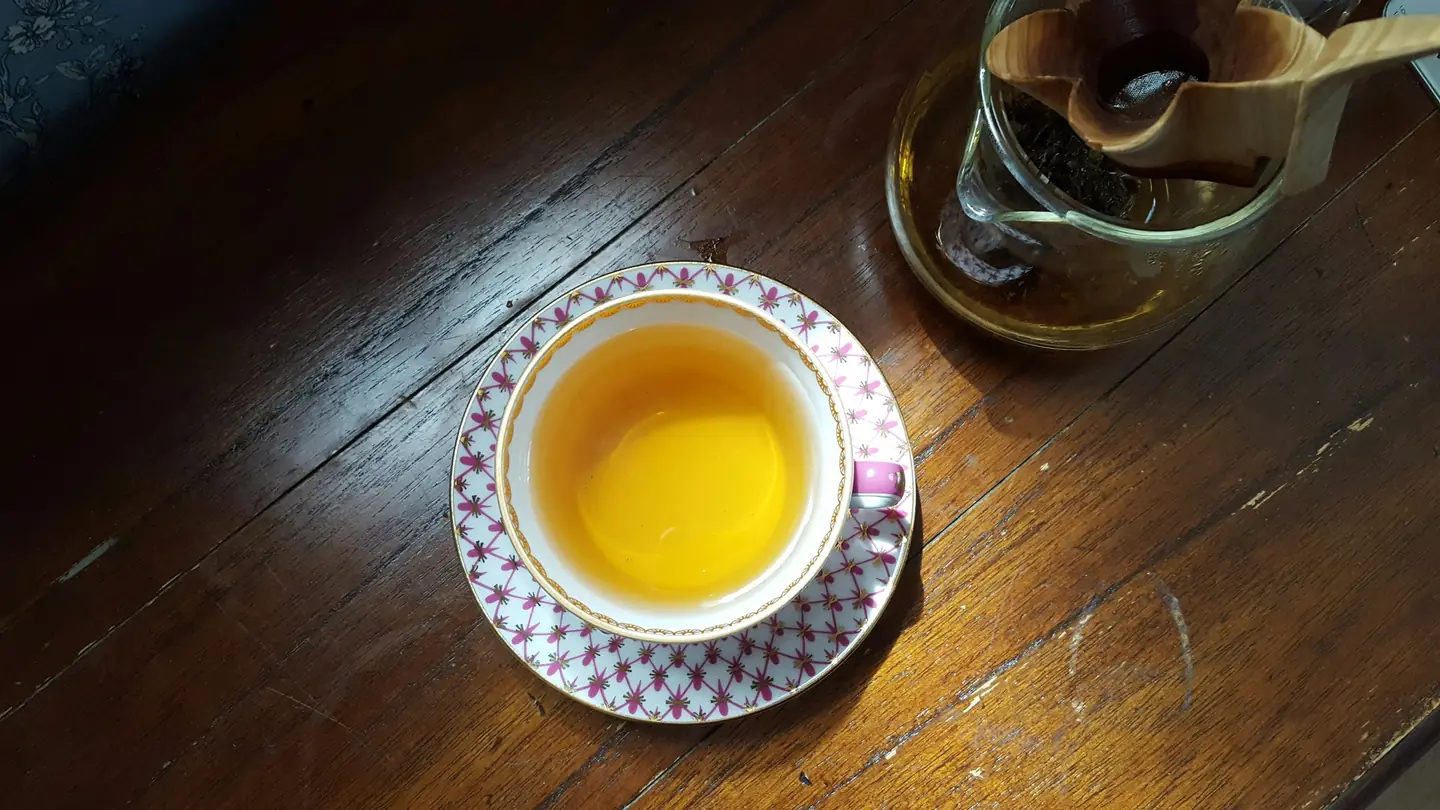
Reading the idea of tea in Evermild
One contemporary example is Evermild by ZCONY. In the brand's controlled scent-note description, black tea appears among the opening notes alongside Decalactone, Ginger and Citrus. The middle-note listing includes Vanillin, Lavender and Jasmine, while Woody, Ambergris and Musk form the base-note group [6].
Seen as a published note structure, this suggests a particular approach: tea placed near citrus and ginger, then set in conversation with softer floral and warm-toned elements. That reading is an interpretation of the brand's confirmed note list, not an account of this publication independently testing the fragrance. It does not establish the presence of tea extract—or any other named natural botanical material—in the formula.
Anyone curious about Evermild can explore the brand's verified public information or store details. But the larger idea stands without a purchase or a product at all: a familiar smell can be reinterpreted without carrying every part of its physical source into the finished work.
Perhaps the memory is not one fixed scent
Next time you make tea, smell the dry leaves first. Then notice what happens when you bring the warm cup close. You may catch a small difference that would usually disappear into the rush of the day. Tea is more than a single sensory label. It is leaves, process, temperature, memory and personal preference, all passing through the same simple ritual.
A perfume need not reproduce that cup perfectly. Sometimes its interest lies in keeping only a fragment—the lightness, the dry edge, the warmth or the delicate feeling someone associates with tea—and allowing the rest to become a new story on skin.
Further reading and sources
[1] A meta-analysis of dynamic changes of key aroma compounds during black tea processing, Food Bioscience 58 (2024), 103784. https://doi.org/10.1016/j.fbio.2024.103784
[2] Key odorants of “Keemun Aroma” and their changes during the preliminary processing of Keemun Black Tea, Journal of Food Composition and Analysis 132 (2024), 106254. https://doi.org/10.1016/j.jfca.2024.106254
[3] UK Tea & Infusions Association, Tea Processing and Blending. https://www.tea.co.uk/tea-processing-and-blending
[4] Tanaka & Matsuo, Production Mechanisms of Black Tea Polyphenols, Chemical & Pharmaceutical Bulletin 68(12) (2020). https://doi.org/10.1248/cpb.c20-00295 · Open full text
[5] Uncovering the Dynamic Alterations of Volatile Components in Sweet and Floral Aroma Black Tea during Processing, Foods 13(5) (2024), 728. https://doi.org/10.3390/foods13050728 · Europe PMC full text (XML)
[6] ZCONY-confirmed published scent-note structure (brand-supplied product facts). Evermild — official product information
[7] Wright et al., Effect of Preparation Conditions on Release of Selected Volatiles in Tea Headspace, Journal of Agricultural and Food Chemistry (2007). PubMed abstract · 10.1021/jf062657v